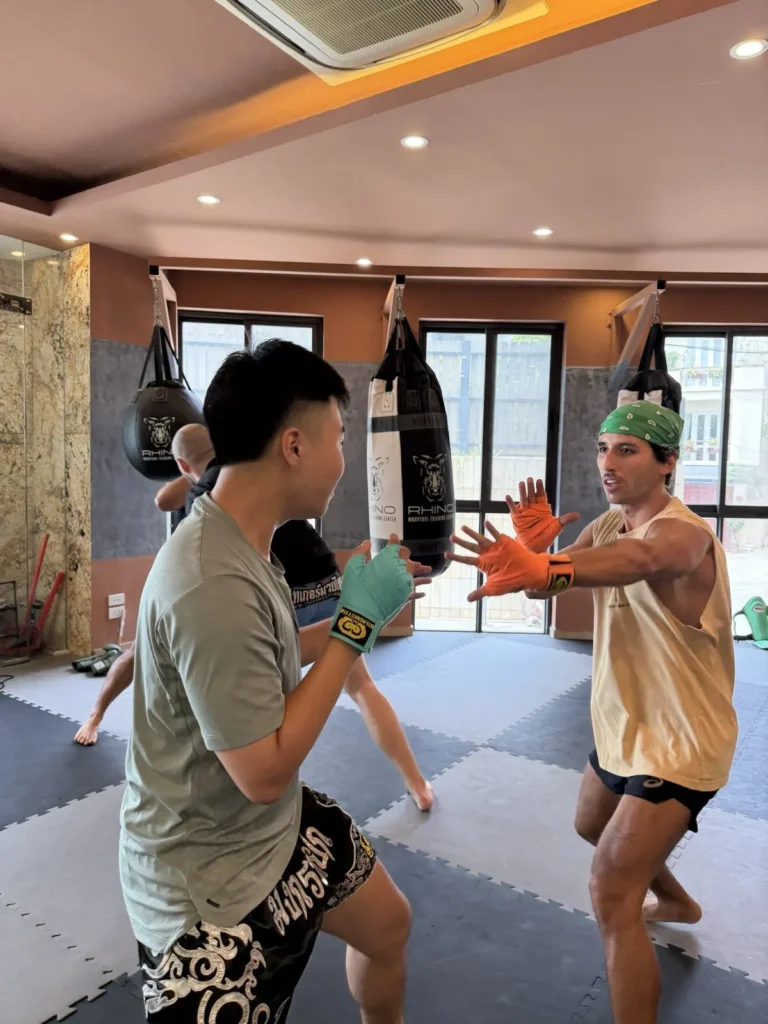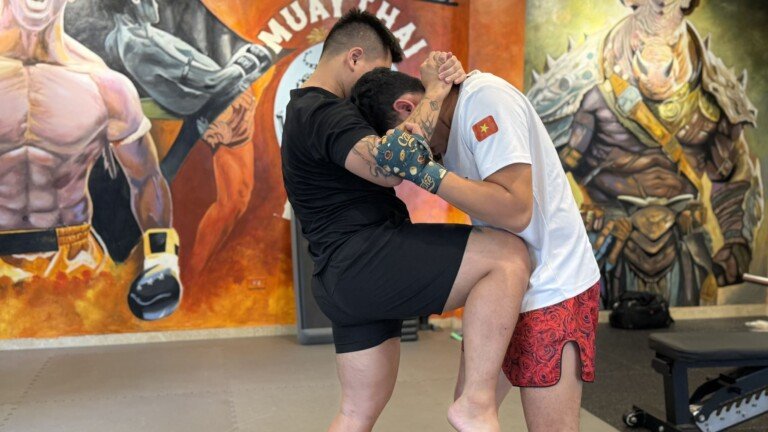
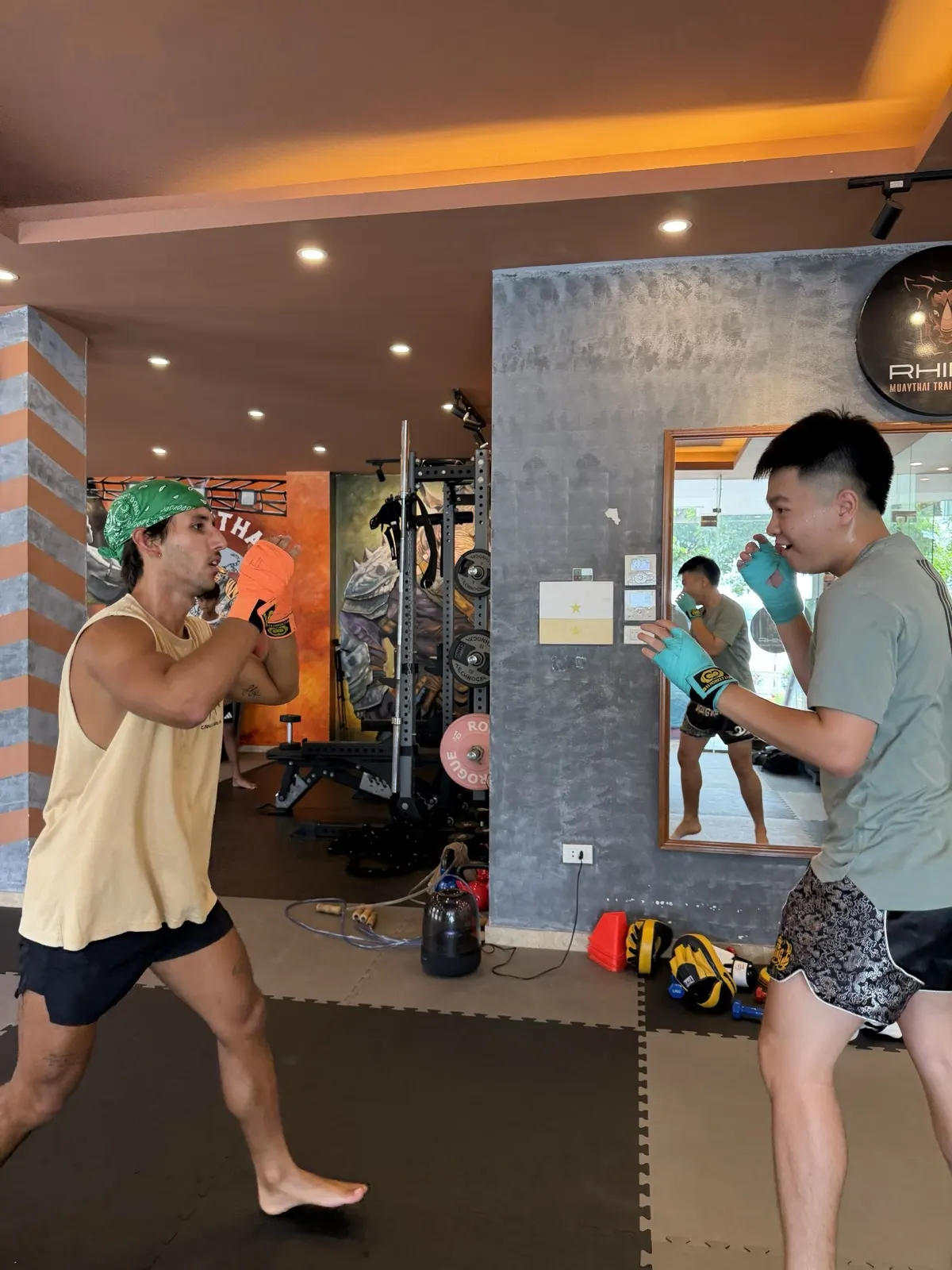
How to increase punching power starts with coordination, not with forcing the arm forward. Your feet provide a base, the legs and hips begin the movement, the trunk passes force upward, and the shoulder and arm deliver it without pulling you out of balance. If one part arrives too early or too late, more effort can produce a messier punch rather than a better one.
A review of strength and punch impact in boxing found associations between punch impact force, lower-body maximal strength and explosive strength in trained amateur boxers. That does not mean lifting heavier automatically makes anyone punch harder. It does support a useful starting point: boxing punching power is a whole-body problem, not an arm-only problem.
How to Increase Punching Power From the Ground Up
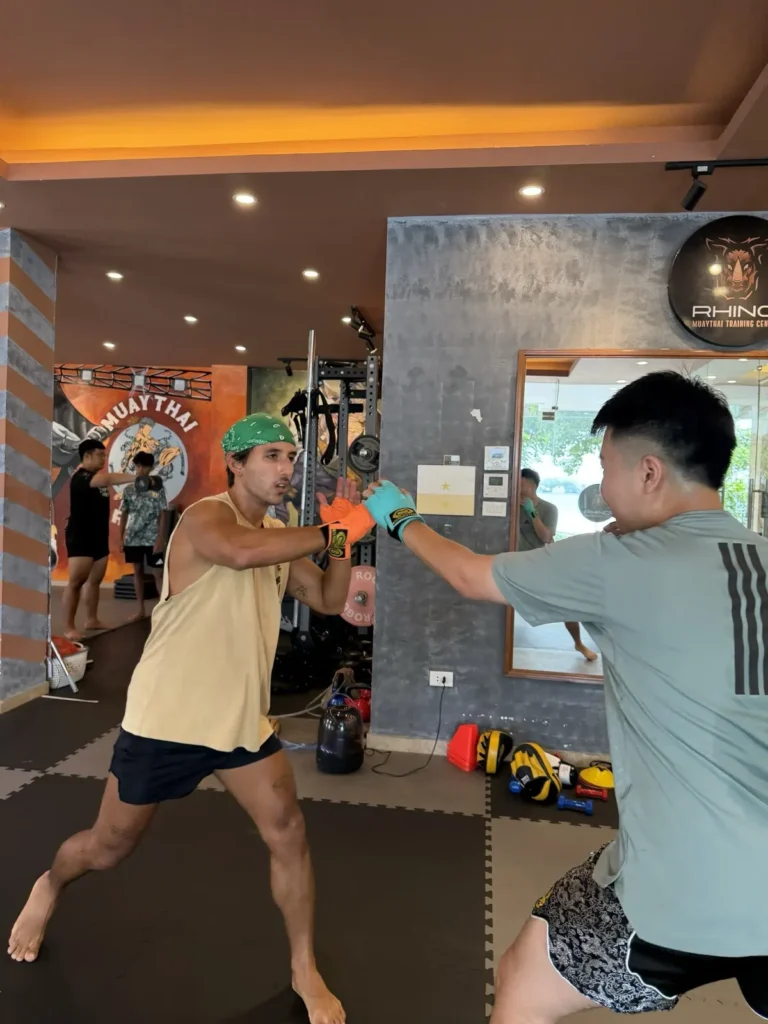
The sequence begins before the fist moves. A stable stance lets you use the floor without leaning or stepping to catch yourself after the punch. The legs and hips start the turn, the trunk connects that movement to the upper body, and the arm finishes the action before returning to guard.
IFMA describes Muaythai technique in terms of timing, precision and effective execution. Those ideas also matter when boxing is trained for fitness and technical development. A coach can see when the shoulder is working ahead of the hips, when the stance is slipping, or when the range is forcing you to reach.
5 Parts of a Safe, Practical Power Sequence
1. Build a Base You Can Keep
Your stance should still exist after the punch lands. If the front foot slides, your weight falls past the lead knee, or you need an extra step to stay upright, the base has stopped supporting the movement. Reduce the effort, reset the feet and repeat the action at a speed you can control.
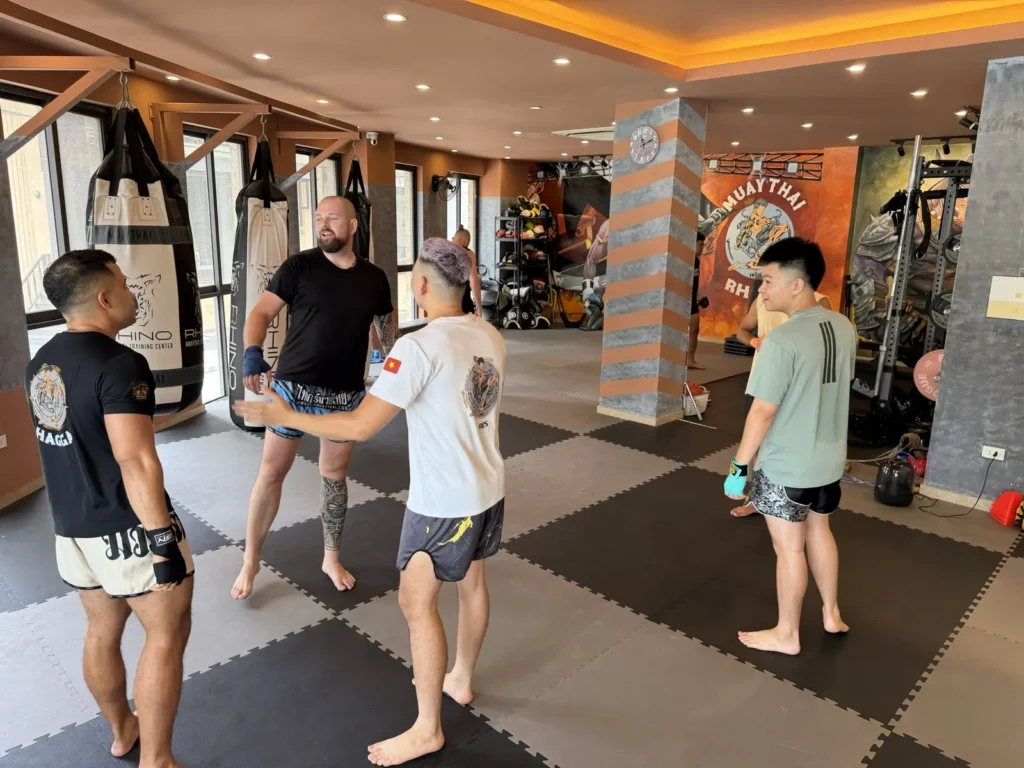
2. Let the Lower Body Start the Work
The lower body does not need a dramatic movement, but it has to contribute at the right time. The boxing review found that lower-body maximal strength was associated with impact force in trained athletes. It is an association, not a universal formula, and technique still determines whether that strength reaches the target.
3. Use the Trunk to Transfer Force
The trunk connects the movement of the lower and upper body. A 2025 systematic review of core strength training reported possible improvements in striking-sport skill performance, but only eight studies met the inclusion criteria and the evidence had limitations. Core work can be one part of training; no single exercise guarantees a harder punch.
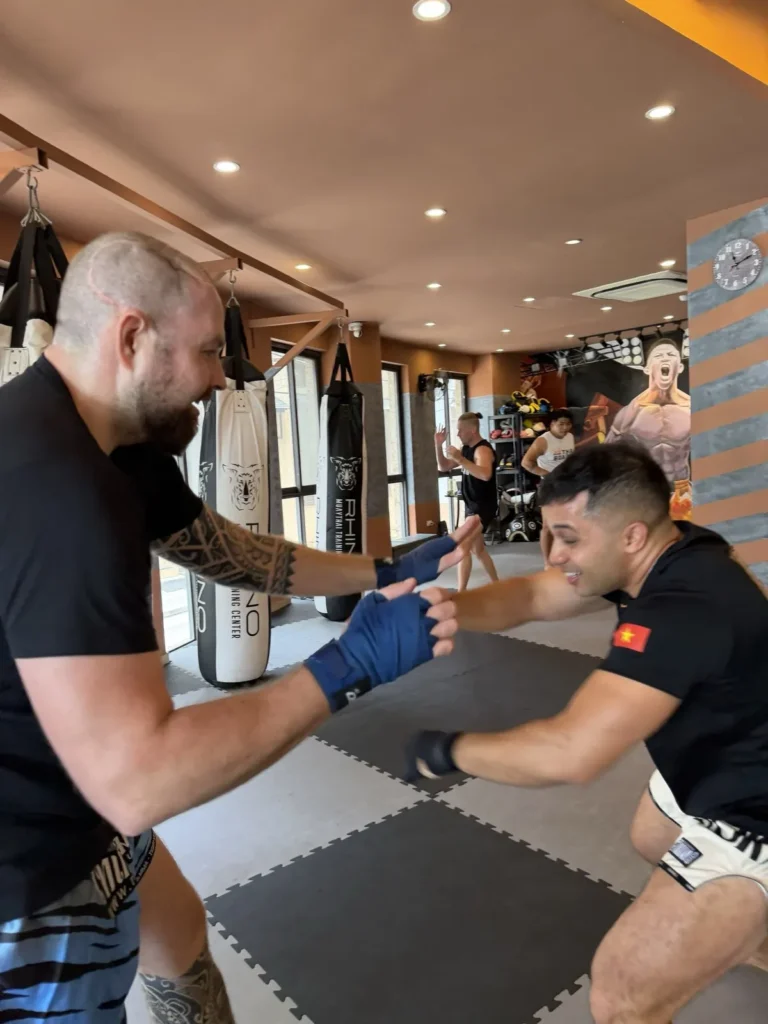
4. Keep the Arm Inside the Sequence
When the arm starts first, the shoulder often tightens and the punch turns into a push. It may feel heavy because the arm is working hard, yet the movement tires quickly and loses the help of the rest of the body. The hand should travel on a clean line, then come back without dragging the torso forward.
5. Meet the Target at the Right Range
Standing too close shortens the movement. Standing too far away makes you reach and gives away the base you built in the first step. Pad work gives the coach a way to change distance, watch the complete movement and stop the round when the technique begins to break down.
| What you notice | What to check | First adjustment |
|---|---|---|
| Shoulders tire before the legs and trunk | Is the arm starting first? | Slow down and reconnect the sequence |
| You step after every punch | Base and distance | Reset the stance and choose a workable range |
| The first punch is clean, later ones are loose | Breathing and tension | Use shorter rounds at a controlled intensity |
| The pad sounds loud but you lose balance | Contact and recovery | Return to guard before adding speed |
What Strength Research Can and Cannot Tell You
Research helps identify contributors, but it cannot select a programme for someone it has never assessed. The boxing review focuses on trained amateur boxers, while the core review combines several striking sports. Neither paper gives a universal number of sets, repetitions or kilograms for a general gym member.
This matters because “stronger” can describe several different changes. One trainee may need a more stable stance, another may need better timing, and another may benefit from strength work chosen around current ability. Testing every punch at maximum effort does not tell you which link is missing.
How to Punch Harder in Boxing Without Testing Every Round
A useful session can separate technique, physical preparation and feedback. The coach may choose a controlled technical repetition, an appropriate lower-body or trunk exercise, and pad work that tests whether the movement stays connected. Those are training categories, not a fixed RHINO session or a promise that every trainee receives the same drill.
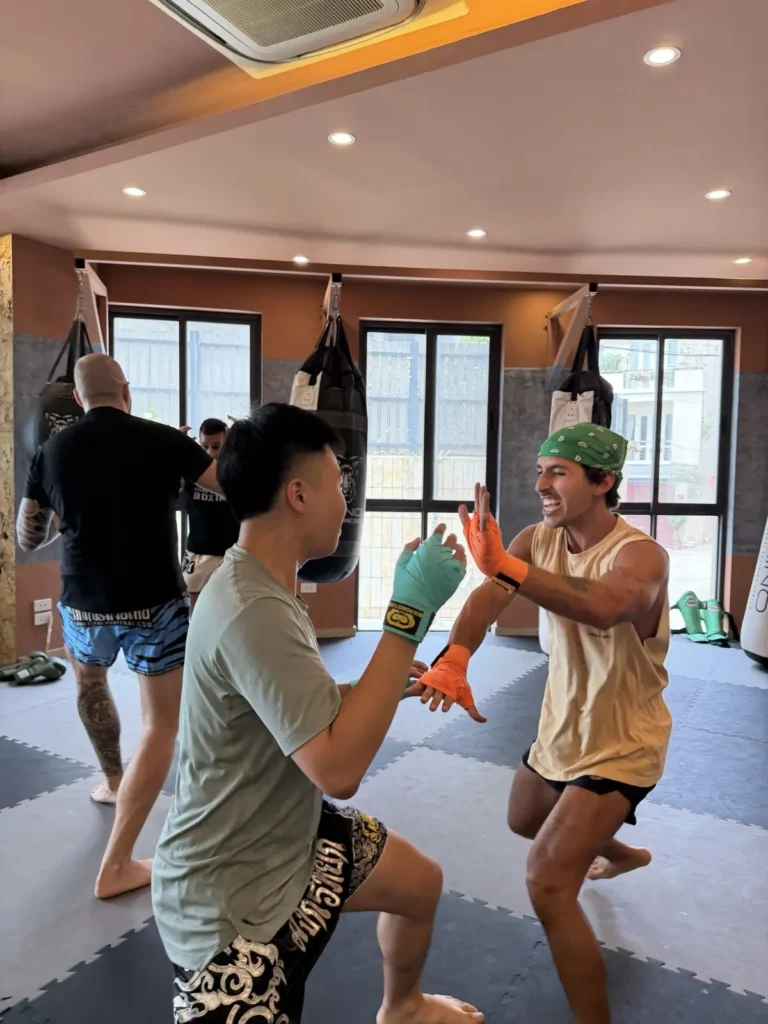
“I created RHINO to be a place where complete beginners feel comfortable, where everyone receives professional coaching.”
Coach ManChai, RHINO Founder, from the RHINO About page
Professional coaching here means the correction should match the person in front of the coach. If your stance fails first, adding an advanced power exercise misses the problem. If the movement is stable but slow, the next training choice may be different.
Want a coach to check where your punch loses force?
Tell RHINO your experience, current goal and the format you are considering. Private 1-1, Private 1-2 and Group 1-6 sessions are available; sending a question does not commit you to a package.
Private 1-1, Private 1-2 and Group Training
Private 1-1 gives the coach more time to watch one person’s stance, range and recovery between repetitions. It can be useful when you want detailed feedback on one movement. That does not mean every private session is a punching-power session; the content depends on the goal agreed with the coach.
Private 1-2 is for two trainees who book together and share one dedicated coach. They can alternate attempts while the coach follows the same pair. Group sessions include up to six trainees, so coaching time is shared across the room and the session follows a common structure.
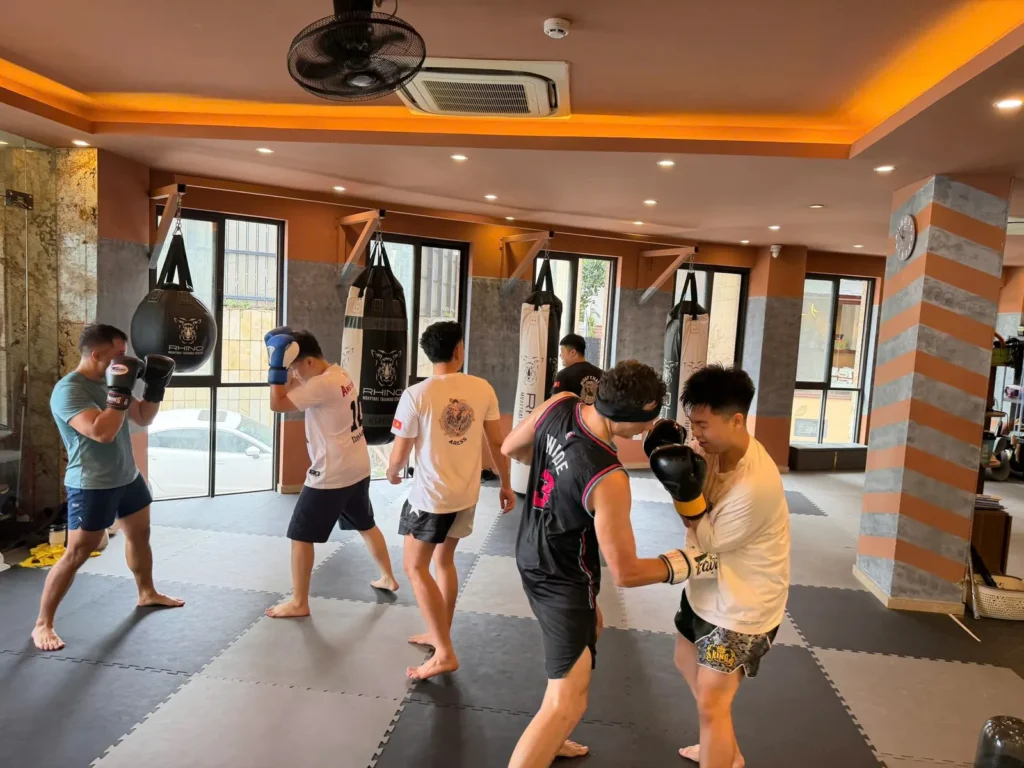
None of the three formats is automatically better. Choose according to how much individual correction you need, whether you have a training partner and whether you prefer a fixed group environment. The private Muay Thai training guide explains the formats, while the Tay Ho location guide shows both RHINO branches.
Two Mistakes That Waste Effort
The first mistake is starting with the arm. The shoulder and hand work hard while the legs and hips arrive late, so the movement feels forceful without being well connected. The first correction is usually to reduce speed and rebuild the order rather than squeeze the fist harder.
The second mistake is leaning forward to reach the target. The punch may touch the pad, but the trainee then has to step or pull back to recover balance. If current pain or a previous injury changes how you move, tell the coach before training and read the Muay Thai injuries guide; an article cannot diagnose an injury or clear you to exercise.
Frequently Asked Questions
Does lifting weights automatically increase punching power?
No. Strength measures are associated with punch impact in trained boxers, but technique and timing decide how force travels through the body. Strength training that ignores the movement problem may leave the same weak link in place.
Can I learn how to increase punching power at home?
You can rehearse a movement that a coach has already given you, use a mirror, or review video at low intensity. The difficult part is judging when the feet, hips and shoulder begin to move. Do not test power against a hard surface.
How long does it take to punch harder?
There is no single timeline. A beginner may feel more stable after correcting stance and range, while physical strength changes take longer and depend on the programme. Pad noise and arm fatigue are poor measures on their own.
Is private training necessary for punching power?
No. Private training gives the coach more time to observe one person, while a group shares that attention among up to six trainees. The suitable format depends on the detail you need, your schedule and how you prefer to learn.
Learning how to increase punching power means connecting several small parts before increasing speed and effort. To ask a coach about your stance, hip movement or pad-work range, call 091 2000 979 or use the RHINO contact page. RHINO has two branches at Dang Thai Mai and To Ngoc Van, both in Tay Ho.