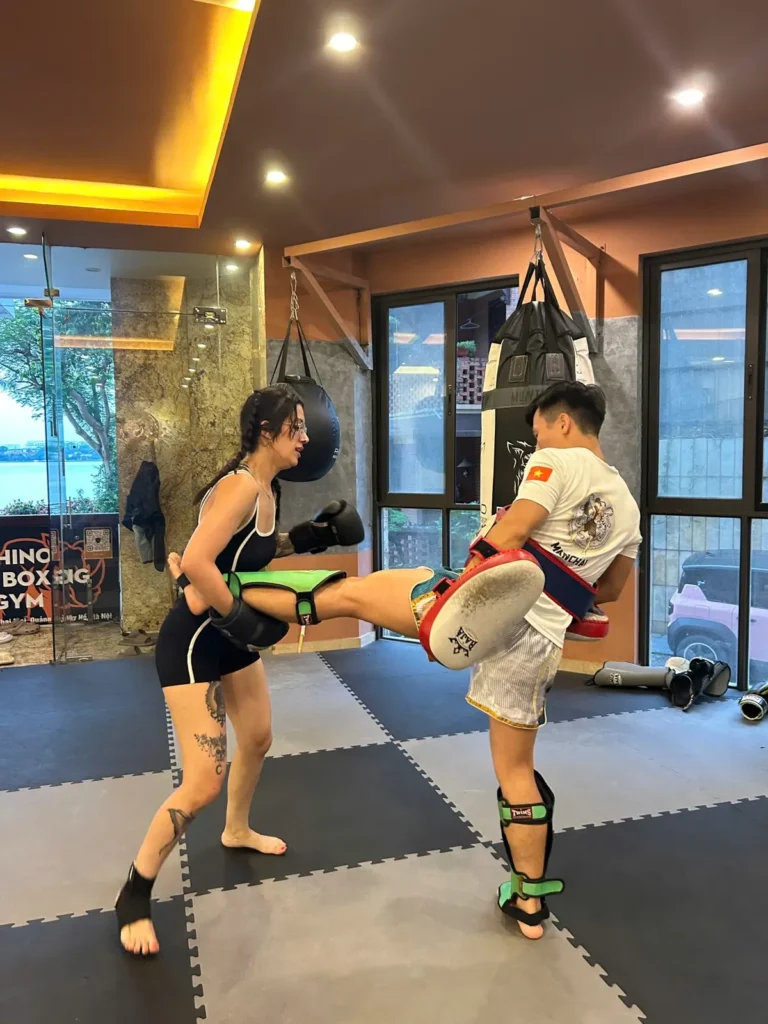
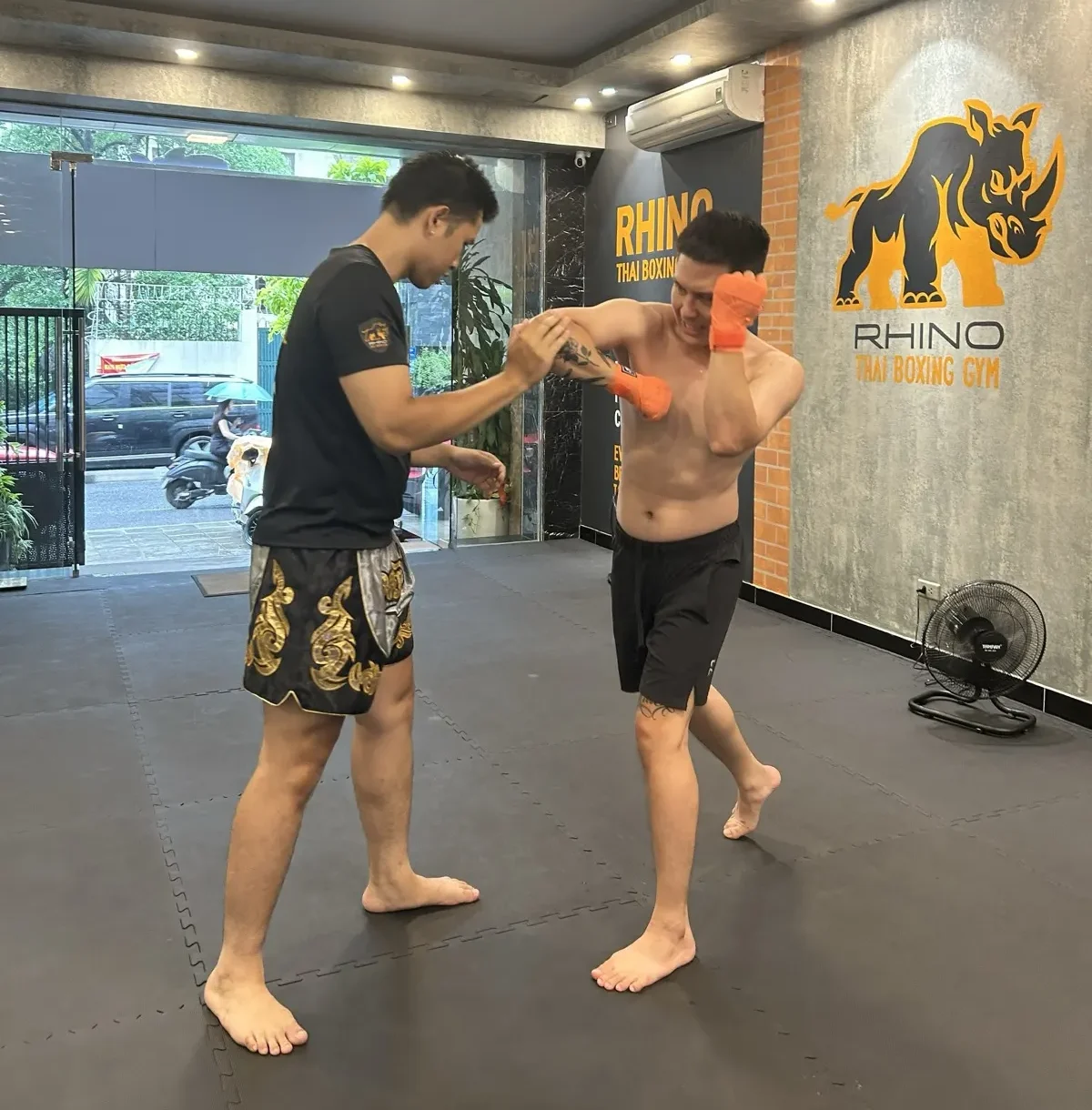
Beginners get hurt more often than professionals, and it is not close. A study in the British Journal of Sports Medicine put the annual injury rate at 13.5 per 1,000 beginners against 2.79 per 1,000 professionals — roughly five times higher for the people with the least experience. That single number is the most useful thing anyone can tell you about muay thai injuries for beginners: the risk is not the sport, it is your first year in it.
This post covers what the research actually measured, which body parts get hurt and in what proportion, why the first twelve months carry the risk, and the specific things that lower it. It also separates two figures that get mixed together constantly — injuries in training and injuries in a sanctioned fight are not the same statistic, and most articles quote the second while answering a question about the first.
1. What the Research Measured About Muay Thai Injuries for Beginners
The honest answer is that it is a contact sport with a measurable injury rate, and that rate is low in absolute terms and highest among newcomers. The BJSM study of injury rates in Muay Thai kickboxing reported annual rates across three experience levels, and the pattern runs opposite to what most people assume.
| Experience level | Annual injuries per 1,000 participants | Injuries costing 7+ days off |
|---|---|---|
| Beginners | 13.5 | 7% |
| Amateurs | 2.43 | 4% |
| Professionals | 2.79 | 5.8% |
Convert the top row and it reads less alarming: about 1.4 injuries a year for every 100 beginners. Of those, 7% took someone out for a week or more, which means the large majority were the kind of thing you train around rather than stop for.
Is Muay Thai Dangerous, or Just New?
Anyone asking is muay thai dangerous deserves both halves of that answer — the rate is real, and it is small. The counterintuitive row is the middle one. Amateurs, who train hard and compete, get hurt less than beginners who mostly do not compete at all. Experience is protective, and inexperience is the actual risk factor. So the useful version of the question is muay thai dangerous becomes a narrower one: dangerous compared to what, and for how long? The full paper is available as an open-access mirror if you want the methodology.
Two numbers that are not the same number
This is where most writing on the subject goes wrong. A 16-year study of professional kickboxers in Victoria, Australia recorded 382 injuries across 3,481 fight participations — about 110 per 1,000 fights. A separate survey found that 55.4% of 195 fighters reported an injury in their most recent bout.
Those are fight figures. They describe two trained people trying to win a scored contest in front of a crowd. They tell you almost nothing about a Tuesday group class, and quoting them as training risk is the single most common error written about muay thai injuries for beginners. Keep the two apart, and notice that the denominators differ too — per 1,000 participants, per 1,000 fights, per 100 minutes. They cannot be averaged or converted into each other.
2. Why Your First Year Carries the Risk
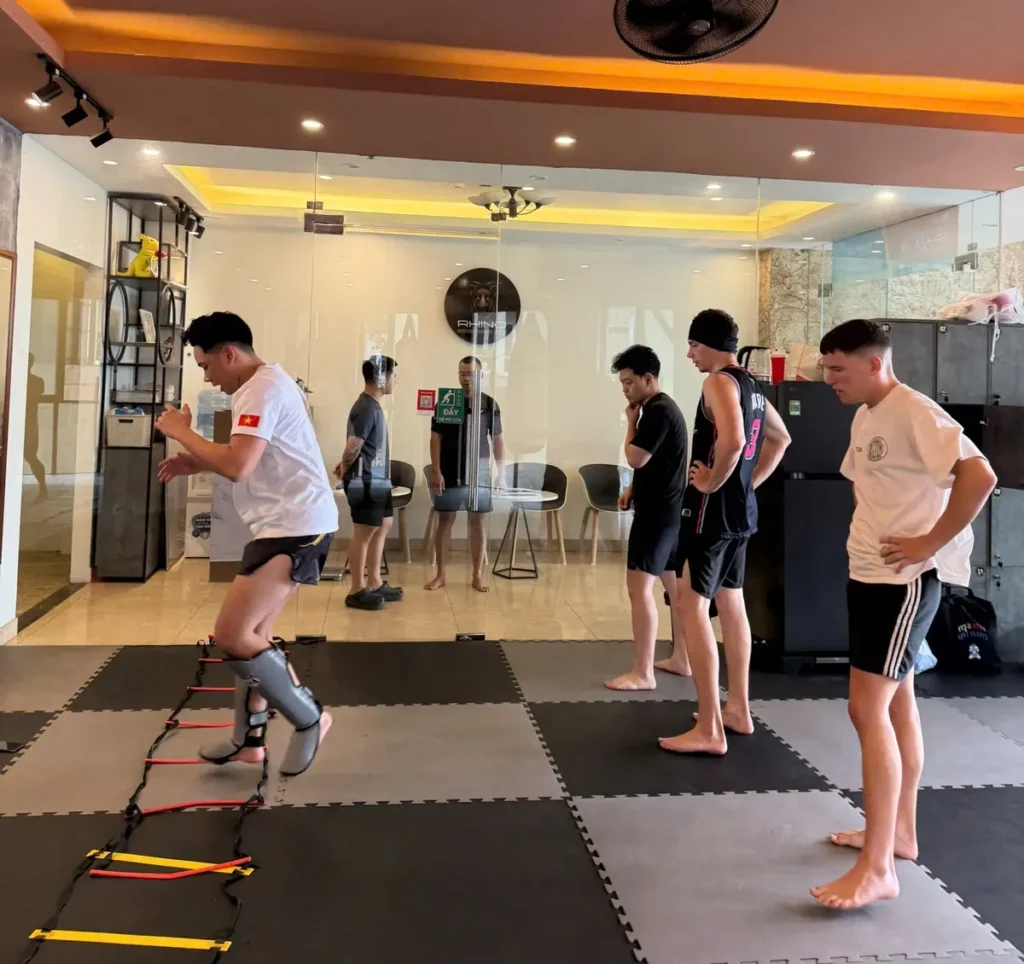
Enthusiasm arrives before technique does. That gap explains most muay thai injuries for beginners, and it shows up in three specific ways in the first months of training.
Your ambition outruns your mechanics. A kick thrown with the wrong part of the shin, or a punch landing with a bent wrist, puts force through a structure that was not built to carry it. The movement looks close enough to correct that nobody stops you, and the damage accumulates quietly over weeks rather than announcing itself in one session.
Your tissue has not adapted yet. Bone, tendon and connective tissue remodel in response to load, and that process takes months. Shins, knuckles and wrists in month two are simply not the same tissue they will be in month twelve, and the volume that a regular student handles easily is a genuine overload for a new one.
You do not yet know the difference between soreness and a problem. This is the one that turns a small thing into a long one. Training through a sharp, localised, one-sided pain because you assume all discomfort is normal is how a two-week issue becomes a two-month one.
3. The Most Common Muay Thai Injuries, by Body Part
The common muay thai injuries in competition are not the common muay thai injuries in a class, which is why the section above mattered. In fights, the Victoria data put head, neck and face at 52.5% and lower extremity at 39.8%. In the survey of recent bouts, extremities accounted for 58% with self-reported concussion at 5.4%.
For someone in a beginner group class with no sparring, the distribution shifts hard toward the bottom of that list. The common muay thai injuries a new student realistically deals with are almost all below the waist or in the hands:
| Area | What it usually is | Typical cause in month one |
|---|---|---|
| Shins | Bruising, tenderness, soreness | Kicking volume rising faster than tissue adapts |
| Feet and toes | Stubbing, jamming, skin damage | Pivoting on an unfamiliar surface, kicking barefoot |
| Wrists and knuckles | Sprains, soreness, skin splits | Bent wrist on impact, wraps too loose or absent |
| Shoulders | Soreness, occasionally strain | Holding guard for longer than the shoulders are used to |
| Knees and hips | Soreness, tightness | Pivoting on a planted foot before the mechanics are grooved |
Almost everything on that list is bruising, soreness or a strain. That matches what the research found: the common muay thai injuries in this group are overwhelmingly minor, overwhelmingly in the legs and hands, and overwhelmingly suffered by people who have not been training long. Notice what is not on the list — the head and face injuries that dominate the competition figures do not appear, because a class without sparring does not produce them.
4. Muay Thai Injury Prevention: What Actually Works
None of this is exotic. Effective muay thai injury prevention for a beginner is mostly a matter of volume, technique order, and honesty about pain. There is no equipment to buy and no supplement involved — muay thai injury prevention at this stage is a set of habits, and the habits are cheap.
Let technique lead power. Throwing softer with correct contact for a month builds the mechanics that let you throw hard later without paying for it. Reversing that order is the most common self-inflicted injury in the sport.
Raise volume gradually, and treat bone like it needs recovery. Shins adapt through repeated moderate loading with rest between sessions, not through punishment. This matters because a persistent myth says otherwise.
Do not kick trees, poles or walls. It circulates constantly and it is wrong. Hitting rigid immovable objects risks fracture and soft-tissue damage rather than building resilience, and no coach worth training under will ask you to do it. A bag absorbs; a lamp post does not.
Wrap your hands, every session. Wraps support the wrist and the small bones of the hand, which is exactly where a beginner’s punching faults show up first. RHINO has gloves available to borrow, so the barrier here is close to zero.
Warm up properly, and keep moving afterwards. The WHO recommends at least 150 minutes of moderate physical activity a week for general health, which three 60-minute sessions comfortably exceeds. A body that moves regularly tolerates load better than one that goes from a desk to a heavy bag twice a week.
Say something when it hurts in a specific place. Coaches can change a drill, adjust your mechanics or move you to a different exercise. They cannot do any of that about a pain they do not know about, and this is the piece of muay thai injury prevention that costs nothing and gets skipped most often.
5. How a Class Structure Changes Your Risk
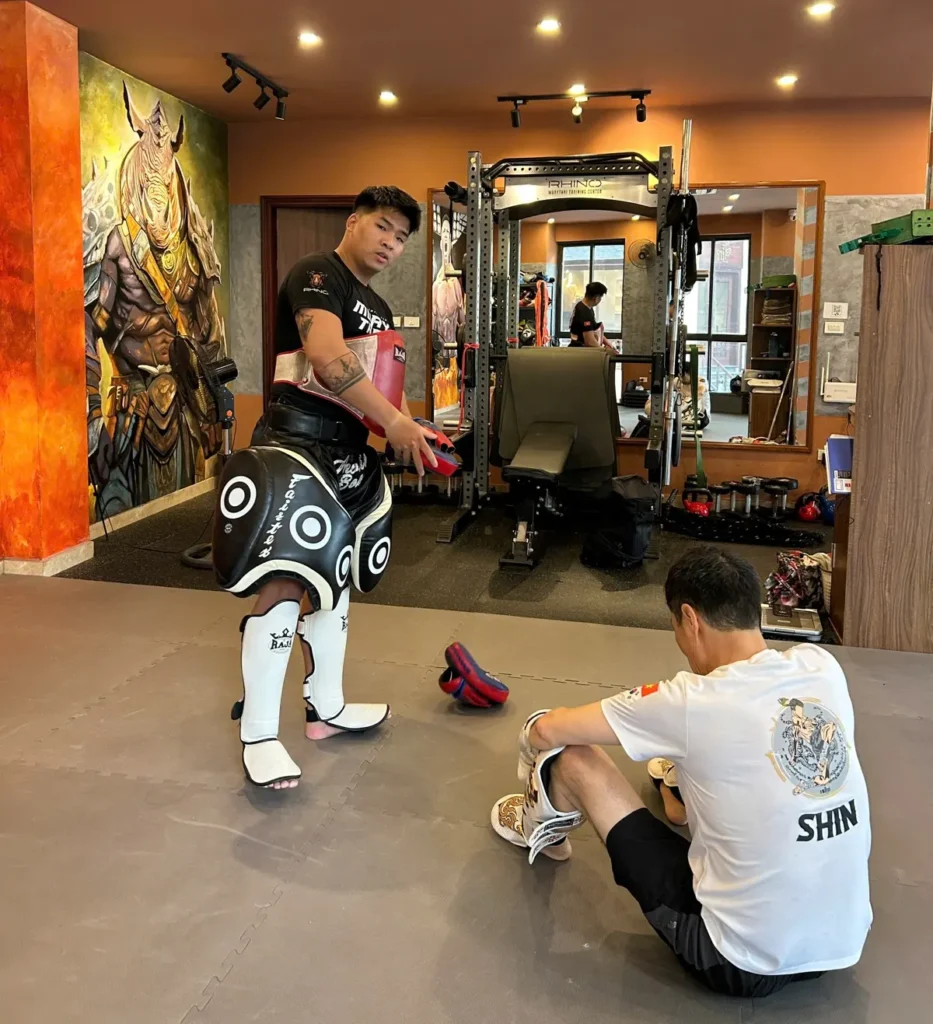
This is the part a study cannot tell you, because muay thai injuries for beginners depend on how a specific gym runs a specific session. Three things about RHINO’s group timetable are relevant to muay thai injury prevention, and all three are already published on the site.
The group class is Combat Fit only. It runs in six slots — 11:00 to 12:00 on Tuesday, Thursday and Saturday, and 19:00 to 20:00 on Monday, Wednesday and Friday. Two parallel three-session tracks, which is why the monthly pass works out as three a week. There is no group class on Sunday.
Group classes cap at six people. Six students to a coach means your technique is corrected in the session it goes wrong, not three weeks later. For a beginner that is a safety feature before it is a teaching one.
Combat Fit is not a sparring class. Partner contact and sanctioned fighting are where the head and face figures in section 1 come from. A conditioning and technique class does not put you there, which is why the common muay thai injuries for a new student sit in the legs and hands rather than the head.
Three sessions a week is also the frequency used in the research on 13 weeks of Muay Thai training in previously untrained women, which found fitness improvements at both two and three sessions weekly. The point is not that more is better. It is that a manageable, repeatable schedule is what lets tissue adapt on time.
Want to see a class before committing?
A group drop-in is 300,000₫ with no booking required, and gloves are available to borrow. Combat Fit runs six slots a week in Quang An, Tay Ho.
When to Stop Training and See a Doctor
We coach; we do not diagnose. This section is about recognising when a question has stopped being a training question, and the honest answer is that some of these need a professional rather than a coach.
Pain that is sharp rather than dull, that sits in one specific point you can put a finger on, that is worse the next morning than it was the night before, or that appears on one side only with no obvious knock to explain it, is the kind of thing to get looked at rather than trained through. The same goes for any swelling that does not settle, any joint that gives way or locks, and any impact to the head followed by headache, nausea, confusion or memory gaps — that last one is not a wait-and-see category.
The BJSM figure that 7% of beginner injuries cost seven or more days is the useful frame here. Most things resolve. The ones that do not are usually the ones somebody decided to ignore early.

Frequently Asked Questions
Is Muay Thai dangerous for a complete beginner? It is a contact sport with a measured injury rate, and beginners sit at the highest rate of the three experience groups the BJSM study looked at — 13.5 per 1,000 a year. In absolute terms that is about 1.4 injuries per 100 beginners annually, and most are bruises, soreness and strains rather than anything that stops you training.
Will I get hurt in my first class? Very unlikely in a group class built around conditioning and technique. The most common muay thai injuries in week one are shin tenderness and general soreness, both of which are your tissue responding to unfamiliar loading rather than injuries.
What is the single best piece of muay thai injury prevention advice? Let technique lead power for the first month. Everything else on the list matters, but throwing hard before the mechanics are grooved is the one mistake that reliably costs people time.
Do I need my own gloves and wraps to train safely? Gloves are available to borrow at RHINO, so you can attend a first session without buying anything. Wraps matter more than most beginners expect, because the wrist and hand are where punching faults do their damage — ask a coach to check your wrapping rather than guessing.
How long until my shins stop hurting? It varies, and anyone giving you a fixed number is guessing. What is consistent is the mechanism: shins adapt to repeated moderate loading with recovery in between. Soreness that keeps easing between sessions is the normal pattern; pain in one fixed spot that keeps getting worse is not, and that one is a doctor’s question.
Is Muay Thai safe for children? Different question with a different answer, and we wrote it up separately in martial arts for kids in Hanoi, including what the research does and does not establish.
Does muay thai injury prevention change once I start sparring? Yes, substantially — that is the point at which the head and face figures from the competition studies start to apply to you. It is also a decision you make deliberately with a coach after months of training, not something a group class drops on you.
Where to Start
If you are weighing up whether to begin, the research on muay thai injuries for beginners should not be the thing that stops you — but it should shape how you start. Go gradually, let technique lead power, wrap your hands, and tell a coach when something hurts in a specific place. That is the whole of muay thai injury prevention in one sentence, and the people who get through their first year without losing time are almost always the ones who were unhurried about the first three months.
Our full cost breakdown is in muay thai prices in Hanoi, and if you want a sense of what a first session is actually like, the women’s beginner guide covers it session by session regardless of who you are. For the gym itself — coaches, programmes and the two branches — start with Muay Thai in Hanoi at RHINO.
RHINO Thai Boxing Gym is at 87 Alley 50 Dang Thai Mai, Quang An, Tay Ho, Hanoi. Call 091 2000 979 if you want to ask a coach about a specific injury history before you book — it is a better use of a phone call than guessing from an article.